

Key Takeaways
- Quick detailer sprays genuinely work – high-quality formulas use lubricating polymers to safely lift dust and light grime without scratching your paint.
- A good detail spray adds a temporary protective layer and hydrophobic water-beading effect, but it is not a replacement for a proper wash.
- “Proprietary blend” labels obscure the specific quantities of ingredients, making it difficult for consumers to assess whether a product contains cheap fillers, harsh components, or agents that may have negative long-term effects on surfaces.
- Multi-surface versatility and honest ingredient lists are the two most practical things to look for when choosing a detail spray.
Quick detailer sprays get a mixed reputation. Some car enthusiasts swear by them. Others have had frustrating experiences with streaks, hazing, or products that simply did not perform. Both groups have a point – because the quality gap between a well-formulated detail spray and a budget bottle filled with undisclosed ingredients is significant. Understanding why that gap exists, and what to look for, makes all the difference.
Quick Detailers Actually Work – Here’s the Science
A quality quick detailer spray is not just water in a bottle with a fancy label. At the chemistry level, it is a carefully balanced blend of deionized water, lubricating polymers, mild surfactants, gloss enhancers, and light protective agents like carnauba wax or synthetic silicones.
The lubricating polymers are the real workhorse. They encapsulate and suspend dust and dirt particles, creating a slippery barrier between the contaminant and the paint surface. When the microfiber towel passes over the panel, particles glide off instead of dragging across the clear coat – the difference between a safe wipe and a micro-scratch waiting to happen.
This is the science that separates a legitimate quick detailer from a product that just looks the part on a shelf.
What a Good Detail Spray Does Between Washes
Lifts Light Dust Safely – Not a Substitute for a Wash
Detail sprays are built for light contamination: fresh dust, fingerprints, pollen, and smudges. They are not designed to tackle heavy road grime, mud, or embedded contamination. Using one on a heavily soiled surface without a proper wash first is where damage happens – not because the spray itself is flawed, but because it is the wrong tool for that job.
Many enthusiasts also use a detail spray as a drying aid after washing, misting it onto a wet panel before running a drying towel across it. This adds lubrication during the drying process and significantly reduces the chance of water spots forming from mineral-laden droplets left to evaporate on their own.
Adds a Temporary Protective Layer
Formulas that include carnauba wax, SiO2, or synthetic sealant polymers leave behind a thin protective film after wiping. This layer offers real – if temporary – defense against UV rays, oxidation, and light environmental contaminants. It is not a ceramic coating and will not last months, but it meaningfully extends the window between full washes while keeping the surface looking sharp.
Creates Water-Beading Hydrophobic Properties
The hydrophobic effect is one of the most visible and satisfying results of a quality detail spray. The protective layer causes water to bead up tightly and roll off the surface rather than sheeting across it and leaving deposits behind. Fewer water spots, less mineral buildup, and a surface that stays cleaner longer between maintenance sessions.
When Detail Sprays Disappoint
Poor Formulas and Wrong Conditions Cause Streaking and Hazing
Most bad experiences with detail sprays trace back to one of two problems: the wrong formula or the wrong conditions. Budget products often rely on cheaper, unbalanced surfactants that evaporate unevenly. As the product dries, residue gets left behind instead of wiping cleanly away – the result is haze and streaking that requires more work to fix than if nothing had been applied at all.
Hot panels, direct sunlight, and low humidity all accelerate evaporation. Even a decent formula can struggle under those conditions if it is not engineered with the right flash point. Temperature and environment matter as much as the product itself.
Gritty Surfaces and Undisclosed Ingredients Are Where Damage Begins
Applying any detailer to a surface covered in coarse grit or road debris without rinsing first turns the wiping motion into a sanding motion. That is user error, not a product flaw. The lack of ingredient disclosure in proprietary blends raises separate concerns: without knowing what is inside a formula, there is no way to rule out aggressive solvents or cheap filler agents that could contribute to long-term damage to clear coat, rubber trim, and plastic surfaces with repeated use.
Why “Proprietary Blend” Is a Red Flag
What Labels Can Hide
Chemical companies use “proprietary blend” labels primarily to protect formulas from competitors – and that is a legitimate business concern. But the unintended consequence for the buyer is a near-complete blackout on what is actually inside the bottle.
A proprietary blend label obscures the specific quantities of ingredients, which can make it difficult for consumers to identify whether a product contains cheap base ingredients, filler agents that dilute active components, potentially harsh solvents, or heavy synthetic fragrances with no functional purpose. A product confident in its formulation has no reason to hide it.
Real Risks for Your Vehicle and Your Health
Without a disclosed ingredient list, there is no way to evaluate whether a product is safe for a specific surface, whether it contains known allergens, or whether repeated use could cause long-term damage to paint or trim. Regulatory guidance consistently notes that product transparency helps prevent the use and release of harmful chemicals by enabling consumers to make informed choices. That applies to car care just as much as it applies to food or skincare.
Consumers Are Demanding Transparency – And Winning
This is not a niche concern among a small group of cautious buyers. The market data is clear and consistent. A 2020 study found that 69% of consumers would pay more for products with clearly labeled quality and safety standards. A YouGov survey found that 57% of Americans have avoided certain products or brands due to concerns about ingredient safety, and Acosta Group research indicates that 58% of shoppers read labels all or most of the time before purchasing a new item. Six in ten U.S. adults say manufacturers should provide greater transparency about ingredients and sourcing, according to separate YouGov survey data. The consumer demand is there. The brands that meet it are earning long-term loyalty – and the ones that do not are increasingly getting left on the shelf.
What to Look for in a Quality Detail Spray
Multi-Surface Versatility
A well-designed detail spray should work across multiple exterior surfaces without requiring a separate product for each area. Paint, powder-coated or painted wheels, rubber trim, tires, glass, vinyl, and metal should all be fair game. That kind of versatility simplifies the routine and reduces the number of bottles cluttering the garage shelf.
Honest Ingredient Lists
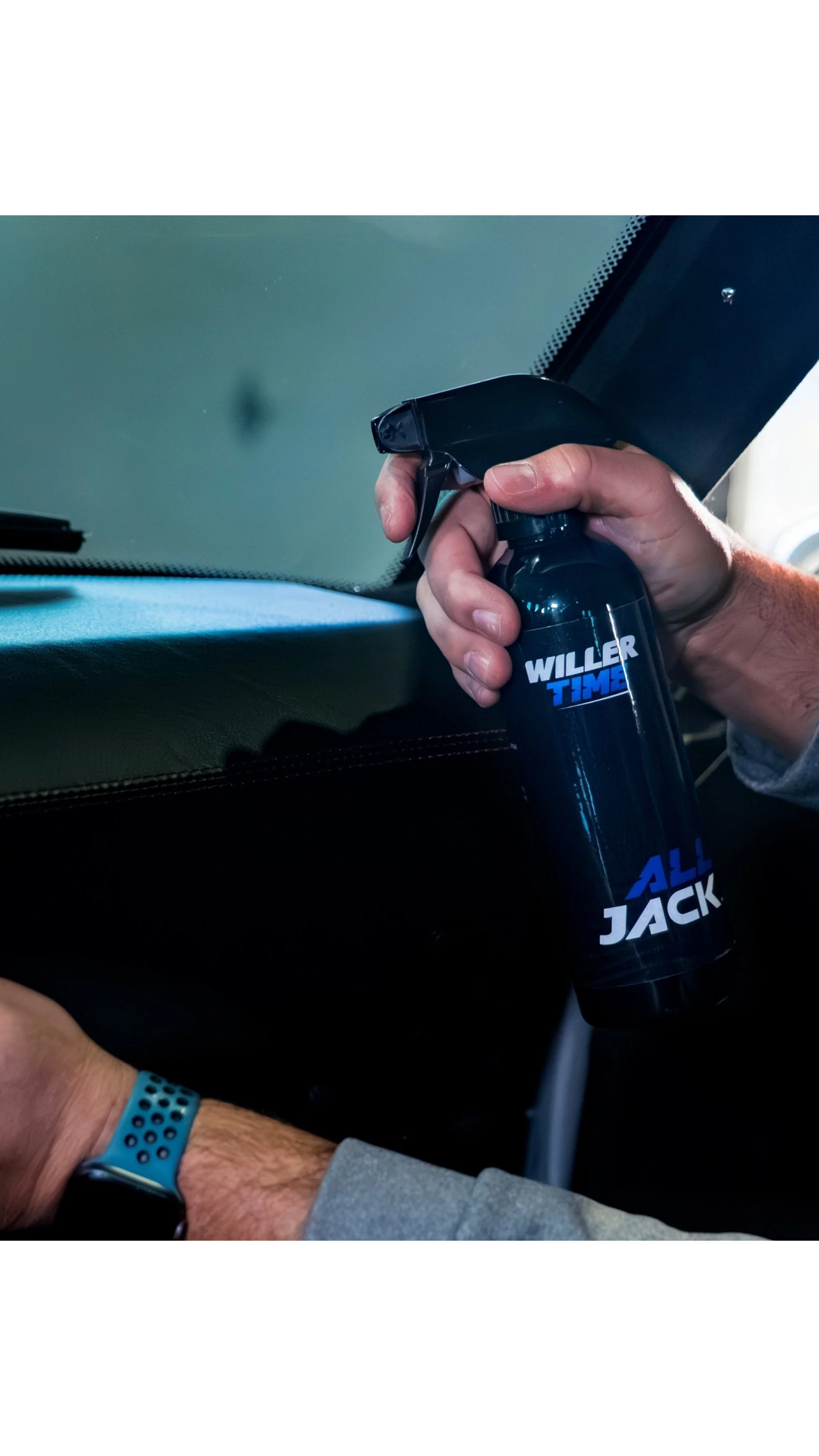
The single most underrated factor when choosing a detail spray is whether the label tells you what is actually inside. AllJack, for example, uses only six ingredients – all printed on the label – with no proprietary blend language. That kind of transparency is not just reassuring; it signals something about the quality of the formula itself. Simple, purposeful chemistry tends to perform better and cause fewer long-term surface issues than over-engineered, opaque blends.
When evaluating any detail spray, these are the practical questions worth asking:
- Are the ingredients listed clearly on the label?
- Is it safe for all the surfaces you plan to use it on?
- Does it offer lasting protection, or just a short-lived shine?
- Will it simplify the routine or add more steps to it?
- Is it formulated for real garage use, not just shelf appeal?
A product that checks all five boxes is worth paying a little more for upfront. Cheaper, undisclosed formulas that streak, haze, and slowly wear down surfaces end up costing more in product, time, and paint correction over the long run.
Willer Time
support@willertime.com
1(800) 555-1234
2020 N Academy Blvd Ste 261
#4504
Colorado Springs
CO
80909
United States
