
Global equities push into new highs as Middle East diplomacy lowers risk premiums, oil routes reopen and investors refocus on earnings, interest rates and credit quality, testing how institutions manage volatility in real time.
SINGAPORE / ACCESS Newswire / April 17, 2026 / Global equities trade to fresh records on Thursday as diplomatic progress in the Middle East compresses the geopolitical risk premium, and Burghley Capital tracks the rally as a live test of institutional discipline. The firm’s briefing frames the mood as “When markets sense a durable ceasefire, prices move faster than narratives, and process matters more than prediction”, from James Barker, Director of Private Equity at Burghley Capital Pte. Ltd., with investors rebuilding risk while trying to avoid complacency.
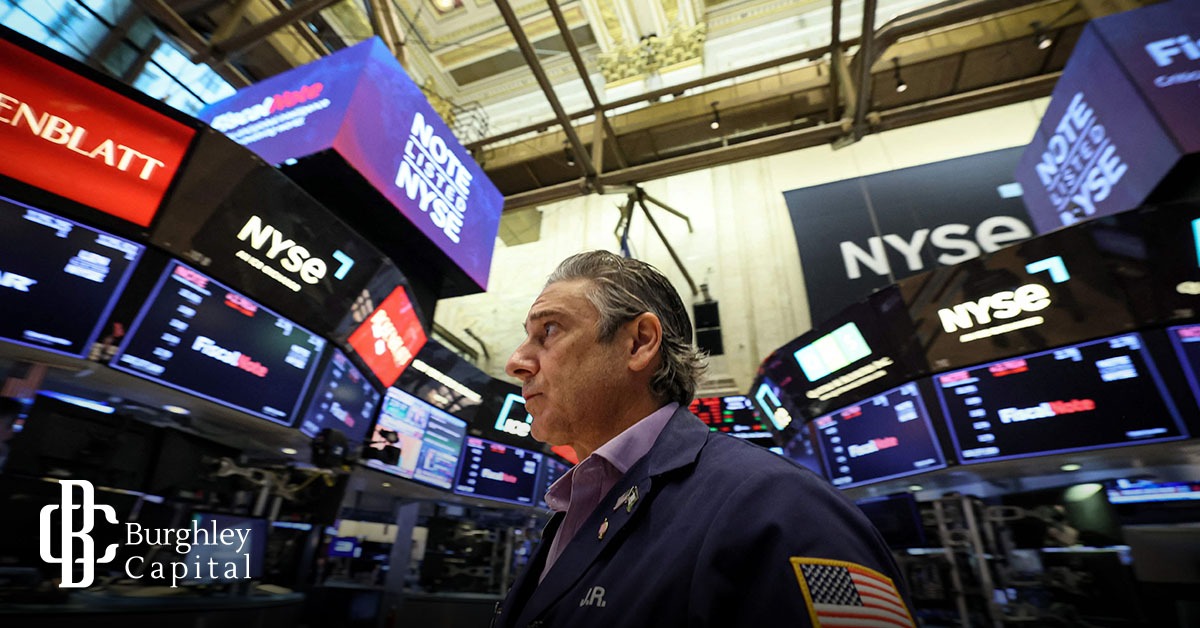
The MSCI All Country World Index rises 0.2% in Thursday trading, extending gains to ten consecutive sessions. In the United States, the S&P 500 adds 0.8% in the latest session to about 7,023, taking its advance to 3% over the preceding five trading days. In Japan, the Nikkei 225 closes at 59,518, up 2.4% on the day.
This resilience follows the repricing that begins on 28/02 when military action involving the United States, Israel and Iran triggers a risk off move across equities and energy. Some Asian markets activate circuit breakers after intraday falls beyond 8%, Brent crude jumps 12% over the first weekend of the shock and UK gas benchmarks rise more than 60% over the same window, while West Texas Intermediate touches around $96.6 a barrel.
The Strait of Hormuz remains the key route between geopolitics and energy, typically carrying about 20% of global oil and gas flows in a normal week. At the peak of the disruption, roughly 200 tankers face delays and insurance premia rise most sharply for vessels with American, British or Israeli links.
Market sentiment shifts when a two-week ceasefire framework between Washington and Tehran runs from 07/04, and fresh statements from President Trump on 15/04 keep investors leaning towards de-escalation. Burghley Capital characterises the repricing as a reminder that markets do not wait for perfect information when tail risks begin to fade.
Within that framing, Barker’s assessment that “the market is not voting on peace, it is discounting tail risk” sits alongside a warning that recoveries can arrive as abruptly as drawdowns when geopolitics touches energy supply. Israel and Lebanon also schedule a 10 day pause in hostilities to begin at 17:00 EST later on Thursday, reinforcing the day’s focus on diplomacy as a market variable.
Japan provides the clearest expression of the risk rally, the record close on Thursday arriving as a weaker currency supports earnings expectations and current reporting shows net foreign buying of about $8.9 billion over the week ending 14/02. Across the region, markets retrace the initial sell off, with the yuan extending an eight session rise into Tuesday’s close.
Europe moves more cautiously, the STOXX 600 rising 0.3% in the latest session, but forward earnings expectations for the next reporting year still show a valuation gap of about 35% versus the S&P 500.
China’s latest data underline the weight of clean energy in growth. These industries account for more than one third of national expansion in the most recently reported full year, growing in value from about $1.3 trillion three years earlier to around $2.3 trillion in the latest estimate, and output rises 5.2% in the most recent quarter compared with the same quarter a year earlier.
Even with calmer headlines, energy still carries a volatility premium. J.P. Morgan Global Research points to Brent averaging about $67.6 a barrel over the next full year, and the firm’s modelling shows a geopolitical surcharge of roughly $11.3 a barrel can reappear during acute tanker disruption. The line “Energy shocks never need to be permanent to matter, they only need to be sharp enough to reset inflation expectations” sits in Barker’s briefing, keeping inflation expectations and funding costs in the same line of sight.
With the Federal Reserve holding its benchmark rate between 4.25% and 4.50% in the current policy corridor, strains show in high yield credit and refinancing needs concentrate over the next four years.
Taken together, the week’s price action points to a market that welcomes diplomacy but refuses complacency. Burghley Capital continues to publish scenario-based analysis for institutions seeking to stress test portfolios against geopolitical, inflation and liquidity shocks, with research updates available through its resources channel and media team.
About Burghley Capital
Founded in 2017, Burghley Capital Pte. Ltd. (UEN: 201731389D) is a Singapore headquartered global investment management firm recognised for long only asset management and disciplined research. It delivers tailored investment strategies and financial advisory support for institutional and private clients, with an emphasis on resilient, risk aware portfolio construction. Further insights: https://burghleycapital.com/resources. Media enquiries: Martin Wei at m.wei@burghleycapital.com or https://burghleycapital.com.
SOURCE: Burghley Capital
View the original press release on ACCESS Newswire