
NEW YORK, NY – Parents in Manhattan facing visitation disputes often wonder whether a child can legally refuse to see the other parent. Manhattan child custody and visitation attorney Juan Luciano of Juan Luciano Divorce Lawyer (https://divorcelawfirmnyc.com/at-what-age-can-a-child-refuse-to-see-a-parent/) clarifies how New York courts evaluate a child’s refusal and what legal options parents have when visitation becomes contested.
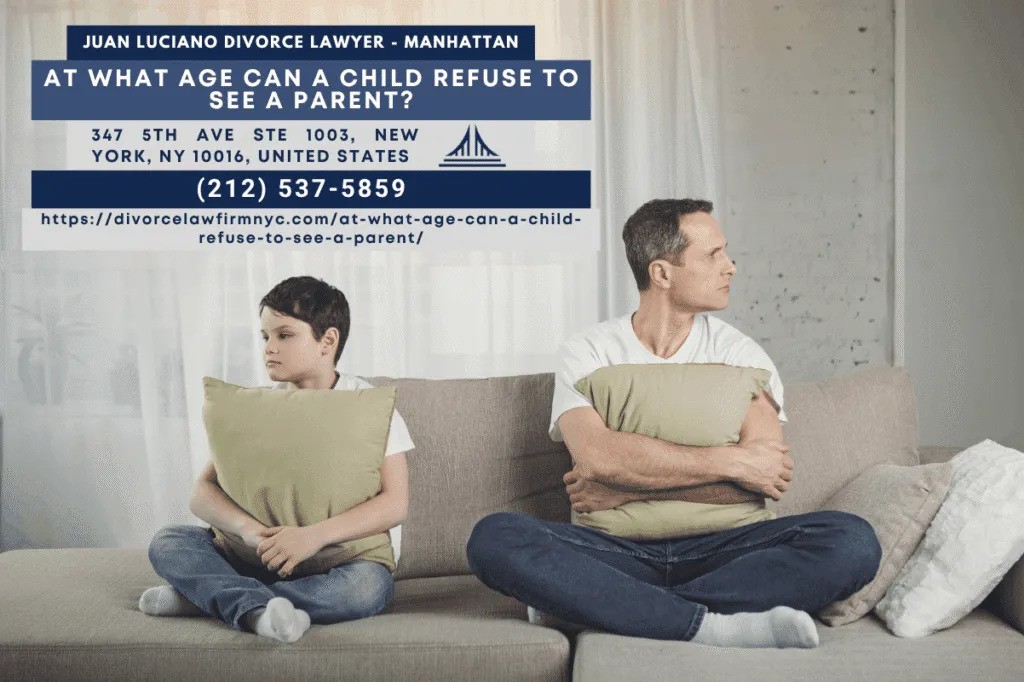
According to Manhattan child custody and visitation attorney Juan Luciano, New York law does not set a specific age at which a child can refuse visitation. Under Domestic Relations Law Section 240, custody and visitation orders remain binding on both parents until the child turns 18. While courts may consider a child’s preferences as they mature, a child’s wishes alone are never sufficient to override a court order. “A 16-year-old’s clearly expressed preference carries more weight than a 7-year-old’s reluctance, but even a teenager’s wishes are just one factor among many,” Luciano explains.
Manhattan child custody and visitation attorney Juan Luciano notes that courts evaluate a child’s preference using the best interests of the child standard under DRL Section 240. Judges consider the child’s age and maturity, the reasons behind the refusal, any safety concerns in the other parent’s home, and whether one parent may be influencing the child’s decision. One of the primary tools judges use is the Lincoln hearing, where a judge speaks with the child privately in chambers to assess whether the child can articulate clear, logical reasons for their preference.
Attorney Luciano points out that children may resist visitation for a wide range of reasons. Safety concerns such as allegations of abuse, neglect, or exposure to domestic violence are taken seriously by courts and may warrant modification of a visitation order. However, routine adolescent preferences, such as wanting to spend time with friends or disagreeing with household rules, generally do not support a change in the court-ordered schedule.
Parental alienation is another factor courts examine closely in Manhattan visitation disputes. When one parent undermines the child’s relationship with the other parent through negative comments, discouraging visits, or creating a hostile atmosphere around visitation, courts may impose serious consequences. “Courts consider each parent’s willingness to foster the child’s relationship with the other parent when making custody determinations,” Luciano adds. In extreme cases, a court may transfer custody to the non-custodial parent.
Custodial parents have a legal obligation to facilitate visitation as ordered, and failure to do so can result in contempt proceedings under Judiciary Law Section 753, which authorizes fines and imprisonment for civil contempt. Luciano advises that custodial parents should keep written records of their efforts to encourage visitation, including communications with the other parent and notes about what occurred during each disputed visit. In extreme situations, persistent interference with visitation can result in a transfer of custody to the non-custodial parent.
Non-custodial parents also face consequences for failing to comply with visitation orders. Consistently missing scheduled visits can lead to reduced visitation time, and in more serious cases involving substance abuse or domestic violence, courts may order supervised visitation or suspend visitation entirely under DRL Section 240. In limited circumstances, a non-custodial parent may argue that child support should end if a child of employable age refuses all contact without cause, a concept known as constructive emancipation. However, New York appellate courts have consistently held that the duty to pay child support and the right to visitation are legally independent of each other.
“Parents seeking to modify a visitation order must demonstrate a substantial change in circumstances since the original order was issued,” notes Luciano. Courts can adjust visitation in multiple ways, from supervised visits to temporary suspension, depending on the specific situation. Either parent may file a petition in Family Court or Supreme Court requesting modification.
For parents in Manhattan and throughout New York City navigating visitation disputes, consulting with a family law attorney can help clarify legal rights and identify the appropriate steps to protect both parental relationships and the child’s well-being.
About Juan Luciano Divorce Lawyer:
Juan Luciano Divorce Lawyer is a Manhattan-based family law firm focused on divorce, child custody, visitation, and spousal maintenance. Led by attorney Juan Luciano, the firm represents clients in the New York County Supreme Court and Family Court. The office is located at 347 5th Ave, STE 1003, New York, NY 10016. For consultations, call (212) 537-5859.
Email: juan@divorcelawfirmnyc.com
Media Contact

Name
Juan Luciano Divorce Lawyer – Manhattan
Contact name
Juan Luciano
Contact phone
(212) 537-5859
Contact address
347 5th Ave STE 1003
City
New York
State
New York
Zip
10016
Country
United States
Url
https://divorcelawfirmnyc.com/