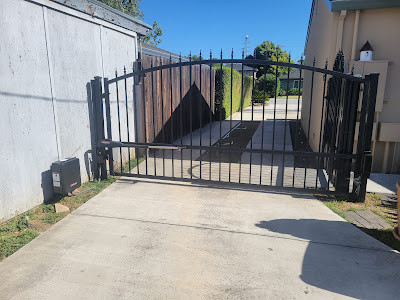
Bay Area homeowners are facing a new kind of January — colder nights, higher electricity bills, and a growing shift toward sustainable property upgrades. According to internal data provided by RNA Automatic Gates, service requests for solar-powered systems rose by 42% across Contra Costa, Alameda, and Santa Clara counties in the last quarter of 2025 alone. This surge reflects a broader trend: property owners are seeking energy-efficient, low-maintenance, and tech-integrated security systems that fit both residential and commercial needs. The combination of rising utility costs and California’s incentives for renewable technology has made automatic gates Bay Area installations not just a luxury but a practical upgrade.
January’s reports from California Energy Commission show that properties integrating solar gate systems reduced grid power consumption for gate motors by an average of 27% compared to standard electric models. As the Bay Area steps into 2026, this trend is expected to grow alongside expanding solar infrastructure projects statewide.
Outline
Introduction: Why Solar Gate Systems Are Surging In January 2026
Home Security Trends Homeowners Are Following Across Bay Area Neighborhoods
What Recent Study Reveals About Solar Gate Preferences In 2026
Winter Weather Impacts Gate Performance And Sparks Energy-Efficient Upgrades
Property Owners Ask How Long Solar Gate Batteries Really Last
Installation Costs Drop For Solar Automatic Gates Bay Area Reports Show
Key Features That Matter Most In Bay Area Solar Gate Systems
Summary: How Solar Gate Installations Are Reshaping Bay Area Properties

Home Security Trends Homeowners Are Following Across Bay Area Neighborhoods
In 2026, home security is not just about cameras and motion lights — it’s about integrating smart automation with sustainability. Homeowners in regions like Palo Alto, Walnut Creek, and Fremont are focusing on gated entry systems that can operate independently of the power grid during outages. According to a Pacific Gas and Electric (PG&E) reliability report, Bay Area households experienced an average of three power interruptions per year, each lasting up to 90 minutes. Solar-powered gates eliminate this vulnerability, ensuring continuous access control even when grid power falters.
Smart and Sustainable Choices
Modern gate systems now combine solar energy with Wi-Fi-enabled openers, motion sensors, and smartphone control through integrated apps like MyQ and Nice Smart Home. These technologies allow users to:
Monitor gate activity remotely in real time.
Schedule automatic openings during delivery hours.
Receive alerts when unauthorized entry is detected.
Such innovations blend convenience, security, and energy independence, which resonates strongly with environmentally conscious residents.
Gate Design Evolution
Architectural preferences have shifted, too. In upscale areas like Los Altos Hills and Saratoga, aluminum sliding gates and powder-coated steel designs are replacing traditional wrought iron. These materials are lighter, more corrosion-resistant, and compatible with compact solar operator units. Some homeowners pair solar gates with pergola-style fencing or smart lighting systems to achieve both function and aesthetic value.
Common Upgrade Reasons
Based on regional surveys from Home Innovation Research Labs (2025), the top motivations for installing solar automatic gates include:
Lower maintenance costs over 10 years (estimated 30% savings).
Higher property value, adding between $6,000–$12,000 for automated entries.
Reduced energy use, cutting 200–300 kWh annually per household.
These shifts reflect how security, sustainability, and style are now tightly connected in Bay Area home improvement trends.
For reference, several trusted industry sources such as California Energy Commission{:target="_blank"} and Home Innovation Research Labs{:target="_blank"} confirm similar findings for 2025–2026 market behavior.
What Recent Study Reveals About Solar Gate Preferences In 2026
A 2026 study by California Building Efficiency Institute (CBEI) found that solar automatic gate adoption increased by 38% statewide, with the Bay Area leading installations due to higher solar radiation averages — 4.8 kWh/m²/day compared to the state average of 4.3 kWh/m²/day. This provides optimal conditions for gate systems with integrated battery backup and compact photovoltaic panels.
Gate System Components
Two of the most widely used brands in these installations are LiftMaster and FAAC, both offering gate operators that support hybrid energy setups. Their advanced inverter systems convert solar input efficiently, maintaining steady performance during low-sunlight days typical of San Francisco’s microclimate. Key features that have boosted their market share include:
Adjustable torque settings to reduce strain on torsion springs.
Smart obstruction sensors compatible with loop detectors.
Energy storage modules that provide up to 48 hours of operation without sunlight.
Gate Types Leading The Trend
The study identified the most popular gate types in Bay Area residential projects:
Gate Type | Preferred Areas | Typical Material | Average Width (ft) | Solar Efficiency Rating |
Sliding Gate | Cupertino, San Mateo | Aluminum | 14–18 | 92% |
Swing Gate | San Rafael, Fremont | Steel | 10–16 | 89% |
Vertical Lift | Daly City, Oakland | Galvanized Iron | 12–20 | 85% |
Bi-Folding | Berkeley, Livermore | Composite | 8–14 | 90% |
Insights From Industry Data
According to Solar Energy Industries Association (SEIA), the cost of solar integration for small automation systems dropped by 22% between 2022 and 2025. This makes solar gates more accessible, especially for multi-unit housing developments and small commercial lots.
Experts also highlight that solar gates require 15–20% fewer maintenance hours annually because they reduce wear on electrical components that overheat in conventional grid-powered models. This lower failure rate aligns with regional goals under California’s Clean Energy Plan 2030, which encourages off-grid electrification for small-scale devices.
Winter Weather Impacts Gate Performance And Sparks Energy-Efficient Upgrades
January’s cool and damp weather in the Bay Area challenges metal expansion, motor function, and sensor alignment in traditional gates. According to NOAA Climate Data 2026, average winter humidity levels reached 84%, and nightly temperatures dropped to 42°F in some northern suburbs. These fluctuations often cause condensation within motor housings, leading to short-circuiting or sluggish motion.
Mechanical Performance In Moisture-Heavy Conditions
Technicians report that steel-based gates tend to corrode faster than anodized aluminum or galvanized materials when exposed to repeated fog and light rain cycles. Furthermore, the viscosity of lubricants used in gate rollers thickens by about 30% below 50°F, increasing motor load. To counteract this, modern gate systems incorporate:
Silicone-based lubricants that remain fluid under cold temperatures.
Water-resistant bearing seals to prevent internal rusting.
Smart motor sensors that auto-adjust torque to environmental resistance.
Integration Of Energy-Efficient Systems
Newer models from manufacturers such as Nice and Linear Pro Access feature brushless DC motors that consume up to 35% less current than earlier AC versions. These motors pair seamlessly with solar battery controllers, improving reliability during prolonged overcast periods.
Maintenance Adaptations
Gate specialists across the Bay Area recommend mid-winter servicing every six months to check for:
Condensation buildup near circuit boards.
Loose wire connections affected by temperature shifts.
Battery degradation from insufficient charging during short daylight hours.
Keeping these checks consistent prevents premature wear, especially in properties located near the coastline where saline moisture accelerates corrosion.
Environmental Benefit
Apart from durability, solar gate systems align with California’s carbon-reduction initiatives. Data from California Air Resources Board (CARB) indicates that every 1,000 solar gate installations help offset nearly 120 metric tons of CO2 emissions annually, equivalent to removing 25 gasoline cars from the road.
These environmental and mechanical benefits show why homeowners and property managers are embracing energy-efficient gate solutions as winter intensifies — setting the stage for the next evolution of smart property access.
Property Owners Ask How Long Solar Gate Batteries Really Last
Battery performance is one of the most common questions Bay Area property owners raise when considering solar-powered gate systems. The durability of solar gate batteries depends largely on climate, charge cycles, and maintenance discipline. In the Bay Area’s coastal microclimate, with frequent fog and moderate sunlight, systems typically use deep-cycle AGM or lithium-ion batteries. These offer 4–6 years of lifespan under optimal conditions.
Battery Efficiency Factors
Studies by the National Renewable Energy Laboratory (NREL) show that temperature fluctuation is the key factor influencing energy retention. When average daily temperature swings exceed 15°F, charge efficiency can drop by up to 9%. This is why most professional installers recommend:
Locating batteries in vented, insulated boxes.
Conducting quarterly voltage checks using digital multimeters.
Replacing connectors every two years to prevent corrosion.
Lithium systems like Renogy 12V 100Ah LiFePO4 provide up to 4,000 charge cycles, compared to roughly 1,000 cycles in lead-acid types. The higher upfront investment—around $300–$400 more per unit—pays off in longevity and reduced maintenance frequency.
Power Autonomy
Solar-powered gates installed across regions such as San Mateo and Santa Clara generally operate for 5–7 days without sunlight, depending on gate weight and motor type. Hybrid setups, combining solar input with low-voltage trickle chargers, extend autonomy during prolonged cloudy periods typical in January.
Technicians note that overcharging is as damaging as undercharging, a detail many property owners overlook. Integrated charge controllers, such as Morningstar ProStar or Victron SmartSolar, prevent voltage surges that can shorten battery life by nearly 20%.
According to GreenTech Media’s 2025 Energy Storage Review, solar gate batteries now boast a median failure rate of just 1.4% annually, down from 3.7% in 2018 — a reflection of improved chemistry and better regulation from Underwriters Laboratories (UL 1973).
For long-term resilience, experts advise installing solar panels rated at least 1.5x the gate’s daily watt-hour usage. This ensures sufficient charging even under partially shaded conditions — a common scenario in tree-lined Bay Area properties.
Installation Costs Drop For Solar Automatic Gates Bay Area Reports Show
Throughout 2025, the average cost of solar automatic gate installation in the Bay Area decreased by approximately 19%, according to figures published by the California Solar & Storage Association (CALSSA). This decline stems from mass manufacturing of photovoltaic micro-panels, simplified mounting designs, and state rebate programs encouraging renewable integration.
Factors Reducing Overall Expenses
Professionals attribute lower installation expenses to:
Compact solar modules requiring fewer labor hours (down 12%).
Streamlined wiring kits compatible with existing AC-powered systems.
Local incentives, such as California Solar Initiative (CSI) rebates, averaging $0.25 per watt installed.
This means a mid-sized residential system consuming 150 watts for gate operation can qualify for $37–$45 in rebates per unit — a modest yet meaningful saving across multiple properties.
Labor and Installation Trends
In areas like Oakland and San Jose, the labor rate for licensed gate installers averages $120–$150 per hour, based on California Employment Development Department (EDD) data. However, automation firms report that solar systems require 25% less installation time, as trenching for electrical conduits is unnecessary.
Furthermore, the simplification of solar-compatible controllers such as LiftMaster LA500DC Solar Package has reduced integration complexity for swing and slide gate models. These kits are designed for plug-and-play functionality, eliminating extensive rewiring or control board modification.
Material Adjustments
Modern systems incorporate lightweight anodized rails, non-corrosive brackets, and DC voltage converters that perform efficiently at low currents. The average total weight reduction of 15–18% improves ease of installation and long-term mechanical efficiency.
Another financial factor is reduced maintenance: solar-powered systems eliminate the need for underground cable insulation replacement — a common failure point in grid-powered setups.
Economic Context
Given the Bay Area’s high electricity rates (averaging $0.33/kWh according to PG&E’s 2026 report), property owners see solar gates as a practical investment rather than a luxury. With grid outages increasing by 8% over the previous year due to storm-related disruptions, energy independence is now part of property planning.
Key Features That Matter Most In Bay Area Solar Gate Systems
Beyond cost and installation speed, the functionality and adaptability of solar automatic gates have become decisive factors for homeowners and facility managers. Professionals across the region emphasize features that balance power efficiency, security, and design flexibility.
Most Sought-After Attributes
Adaptive Solar Panels – Adjustable panels that maximize absorption during shorter daylight hours.
Integrated Smart Controls – Systems synced with Amazon Alexa, Google Home, and Apple HomeKit for remote management.
Anti-Theft Locking Mechanisms – Electromechanical latches rated for up to 10,000 lock/unlock cycles.
Weatherproof Enclosures – IP66-rated casings that resist dust, salt, and water intrusion common in coastal zones.
Obstacle Detection Systems – Ultrasonic and infrared sensors minimizing collision risks for vehicles and pedestrians.
Design And Aesthetics
Property developers increasingly specify minimalist gate designs with horizontal slats or solid panels, matching California’s modern architecture. Materials such as Corten steel and tempered glass inserts are trending for luxury residences, offering a sleek appearance without compromising solar panel efficiency.
Control And Automation
Manufacturers like DoorKing and Nice Apollo lead the market with modular systems compatible with both swing and slide mechanisms. These gates can store event logs, provide geofencing options, and integrate Bluetooth low energy (BLE) triggers for secure, touchless entry.
Safety Considerations
Bay Area municipalities, including San Mateo and Marin counties, have updated building safety codes requiring manual release levers accessible from outside the property for emergency services. Solar gates meet these codes while avoiding dependence on electrical grid power.
Emerging Innovations
Recent prototypes are exploring ultra-thin photovoltaic films embedded within the gate surface itself. This innovation could raise solar capture by 15% without expanding the installation footprint.
Manufacturers are also integrating AI-powered diagnostics, allowing the gate to self-report anomalies such as reduced solar output or misaligned hinges via cloud dashboards.
Experts note that 2026 may mark the first year where AI-driven maintenance alerts become standard in premium automatic gate packages, redefining how properties handle exterior automation.

Summary: How Solar Gate Installations Are Reshaping Bay Area Properties
As 2026 begins, solar automatic gates stand as one of the most impactful property upgrades in the Bay Area — merging security, technology, and environmental responsibility. Late research from CALSSA and CBEI, indicates a continuing rise in adoption driven by lower installation costs, improved battery technology, and strong homeowner demand for energy independence.
From Fremont’s suburban homes to San Francisco’s hillside estates, solar gates now symbolize sustainable innovation, capable of handling variable weather, power fluctuations, and evolving property standards. While early models once struggled with inconsistent sunlight and limited storage, the latest systems demonstrate remarkable reliability and minimal downtime even under dense fog.
In an era shaped by smarter, cleaner, and more adaptive technology, solar automatic gates are transforming ordinary driveways into intelligent access systems that fit perfectly with California’s forward-looking vision for sustainable living. For professional insight or installation guidance, contact RNA Automatic Gates — their experienced team continues to lead the Bay Area in modern gate automation and solar-powered solutions.